New York Yearly Meeting
of the Religious Society of Friends (Quakers)

State of the Society Report 1997

Summary of Monthly Meeting Reports

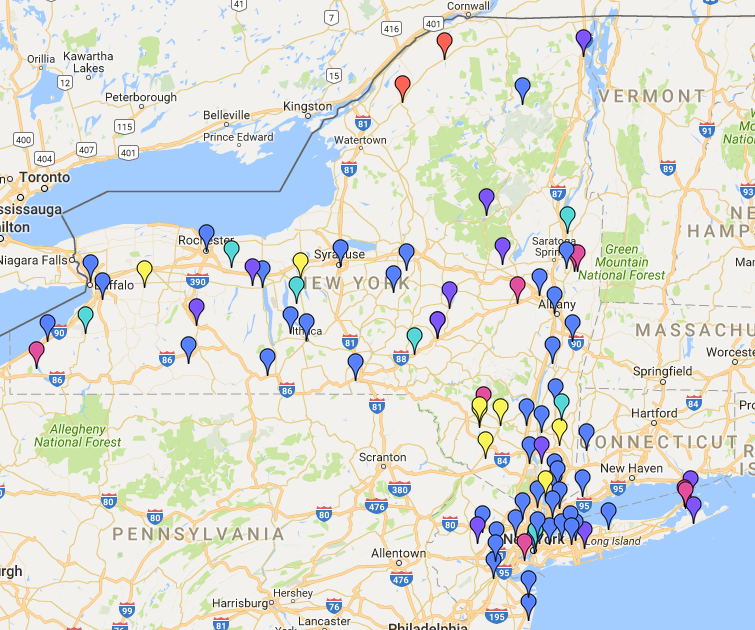
Forty-nine responses were received from Meetings and Worship Groups throughout New York Yearly Meeting. They reflected a spectrum of joys, concerns, celebrations, problems, strengths and apprehensions. The overall flavor was that of seeking and listening through personal and corporate worship. A strong underlying theme was a concern for being renewed and more effective in applying Quaker testimonies and practices to daily living.

There were six Meetings going through difficult times. Three of the seven prison worship groups in the Yearly Meeting responded with appeals for understanding and support. It is clear that monthly meetings are seeking to evolve a way of life that reflects deeper discernment and sensitivity in a society where the operating mode in many ways challenges Quaker values and testimonies.

Many of this year's responses addressed the concerns raised by the queries sent to the meetings. These included:

  1. Areas of meeting life that provided a source of service and strength,
  2. Areas that invoked a sense of inadequacy or that posed special problems,
  3. Areas that revealed new gifts and ministries in the meeting, and
  4. Concerns for the future.

Responses to these queries centered around simplified living, community outreach, spiritual renewal, personal discernment, economic and social justice, alternatives to violence, new peace initiatives and transformation of love into action.

As sources of strength and service, meetings mentioned the following:

  • meeting for worship as the wellspring of the spirit;
  • joy in caring for each other;
  • the blessings bestowed by new members;
  • enrichment that comes from abiding in the spirit of God;
  • the benefits of using and encouraging Quaker process;
  • discovering God at work through personal experiences;
  • experiencing new sources of inspiration through First Day School;
  • extending outreach beyond the Meeting to the community; and
  • discovering enrichment from service to the disabled and disenfranchised.

Some meetings expressed a sense of inadequacy in responding to special situations. Reports pointed to:

  • struggles with personal polarizations among members;
  • difficulties in dealing with sources of conflicts on concepts;
  • time and distance as obstacles to gathering together effectively;
  • impediments to reshaping approaches in dealing with difficult problems in new and creative ways;
  • balancing the needs of the individual in conflict with those of the group;
  • dealing with the problems of the "sandwich generation"; and
  • refocusing commitment during troubling periods of transition.

There were also more positive expressions of response to challenges which included:

  • overcoming space difficulties in conducting meeting for worship and First Day School;
  • prison meetings coping bravely and in the spirit with bureaucratic intractableness;
  • dealing with the limitations of leadership, resources and membership by small meetings;
  • reaching out to the community under difficult circumstances; and
  • dealing harmoniously with the needs of gay and lesbian concerns, as well as the related issue of same-gender marriages.

Under the topic of revealing special gifts and ministries, meetings reported:

  • unanticipated sources of strength rising out of the meeting community;
  • personal messages which evoked unexpected nurture;
  • actions of witness arising from unforeseen circumstances; and
  • in general, finding solutions to problems coming from unlikely people and in unpredictable fashion, attesting to the fact that the Spirit works in strange and wondrous ways!

Looking to the future:

  • several meetings stressed the importance of being a community that cares for people;
  • moving forward with cautious optimism was one manner of expressing this;
  • being encouraged to advance after successfully dealing with formidable difficulties was another; and
  • finding a sense of clearness in reaching out to each other was another.

Reports clearly indicated that meetings vary greatly in size, vigor and aspiration, as well as in availability of money and energy, in coping with their spiritual and physical needs. Many meetings that are small in membership and resources spend much time and energy in just surviving, allowing only for a very modest outreach to each other and to their communities. Their accounts convey a picture of vicissitudes and constraints, as well as of spiritual richness and personal fortitude.

The contrasts are great. There are a number of meetings which are large, vibrant and well provided; that are vitally caring for themselves, their immediate communities as well as wider Quaker responsibilities. The majority of reports, however, reflect middle-sized meetings with workable but limited facilities, slowly growing or stabilizing membership, limited budgets and aspirations to enhance their outreach to the limit of their people and modest resources.

Many meetings are striving to deepen and enrich their meetings for worship in the realization that this provides the spiritual energy that vitalizes everything else. Others deal with concerns centered on the First Day School, on initiating, sustaining, improving, celebrating and rebuilding outreach to children and young families. There is a growing concern for the nurture of the commitment of youth to meeting and community activities.

Another widely held commitment is to maintaining the quality of Quaker life in a society whose values seem to be in opposition to Quaker testimonies. Reference is often made to simplified living, truthful communication, nonviolent resolution of conflict, spiritual values and personal integrity. Seven Meetings are closely involved in the support of prison worship groups, whose members intensely reach out to the outside world for spiritual reinforcement in their effort to rebuild their lives and look towards constructive futures.

Many meetings are laboring with their communities over the death penalty, striving to uphold Quaker testimony and to encourage a more just and nonviolent response! A number of meetings are struggling for clearness regarding same-gender marriages, and seeking to deal lovingly with gay and lesbian concerns. This year, several more meetings report that they have arrived at some unity on these concerns.

In summary, there is a small number of meetings that are doing very well spiritually and physically, a larger number with limited resources and modest success at serving their members with faith and commitment, a smaller number who move ahead more on faith than tangible means, and a small but compelling number with dwindling membership and vitality.

These troubled meetings hang on mostly in faith and conviction, in the face of serious physical and financial difficulties. It is this group, and the prison worship groups, whose appeals for love and support ring out among the many messages of fulfillment and striving in these reports. The hope is strong that we may all work together in New York Yearly Meeting, that we may be led to discern God's will, and respond effectively to the spectrum of joys and concerns in these messages.


Search this site for